A Film Night at Home: One Screen or a Projector?
Choosing a TV or projector for a film night comes down to room light, seating, and setup; match the screen to the space you actually use.
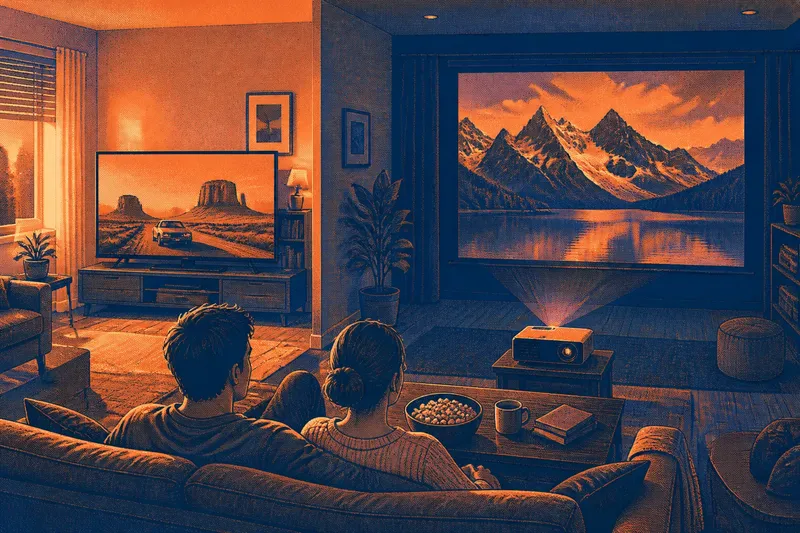
You settle onto the couch, dim the lamps, and realize the evening’s viewing choice starts before the film does: should it go on the television or a projector screen? For a film night at home, the useful comparison is not which format is better in general. It is which one fits your room, the way you watch, and how much setup you want between pressing play and settling in.
Start With the Room
A television gives you a defined viewing area that stays put. You can switch it on in a bright living room, watch with curtains open, or pause and return without changing the space. That convenience makes a TV a natural fit for rooms that serve several purposes throughout the day.
A projector turns a wall or screen into the viewing surface, so the room matters more. Light from windows and lamps can make the image look less distinct, while a clear wall and a place to position the projector make a larger picture easier to enjoy. A room that can be darkened and rearranged is a better candidate than a busy shared space where furniture and lighting change often.
Think of the choice like deciding between a desk lamp and overhead lighting. One gives you a dependable, fixed pool of light; the other changes the feel of the whole room. Neither works best everywhere.
Compare Screen Scale
The television’s image size is fixed, which makes it easy to judge from your usual seat. That predictability suits viewers who prefer a clear focal point without moving chairs or adjusting the room. A large TV can also be easier to fit into an established living-room layout than a projection setup.
A projector makes a broader image possible, but a bigger picture is not automatically more comfortable. The screen should fit the wall and the distance between it and the seats. If viewers sit close to the edges, they may need to turn their heads more often; if the image dominates the room, the film can feel less relaxed than expected.
Before choosing, sit where you normally watch and look at the usable wall or existing TV. Consider whether the image would still feel comfortable from the side seats, not only from the center of the couch. A projector’s scale is appealing when the room can accommodate it without making the seating awkward.
Weigh Setup and Routine
A TV is usually ready whenever the room is. Its screen remains visible and the viewing position is settled, so an ordinary evening can begin with little rearranging. That matters if you often watch briefly, share the room with other activities, or want to leave the screen available between films.
A projector asks for a more deliberate routine. You may need to choose where the unit sits, clear the projection surface, manage room lighting, and put the equipment away or leave it in place. These are everyday considerations, not technical installation tasks. The important question is whether that routine feels like part of the occasion or a barrier to starting.
Say you have a living room with a bright window, a fixed couch, and family members who use the space at different times. Keeping the TV as the everyday screen may suit that pattern, while a projector could make sense only if there is a separate room that can be darkened and arranged for viewing. The observable difference is simple: one option is ready in the shared room, while the other asks for a dedicated viewing setup.
Match Format to Viewing
Choose a TV if your priorities are quick access, consistent use in changing light, and a screen that does not depend on a blank wall. It is also the more straightforward choice when viewers spread across a room or when the screen has to serve more than film nights.
Choose a projector if you value a larger shared image and have a room where you can control light and seating. It can suit planned gatherings, especially when viewers can face one surface together and the equipment can stay ready without disrupting other uses of the room.
There is also a sensible middle ground: keep a television for regular viewing and treat projection as an occasional format in a room that supports it. That avoids asking one screen to serve two different routines. The decision can be about where each option belongs, rather than replacing one with the other.
Which Setup Fits You?
Is a television better for a bright room?
A TV is generally the easier choice when daylight or room lighting cannot be reduced. Its fixed screen remains part of the room, so you can watch without making darkness a condition of viewing.
Does a projector always make a larger image better?
No. A larger image needs suitable viewing distance, a usable surface, and seating that faces it comfortably. If the picture overwhelms the room or side viewers have to shift position, a smaller fixed screen may be more pleasant.
Can a projector work in a shared living room?
It can if the room has a practical projection surface and the equipment does not interfere with other activities. If furniture, light, or room use changes frequently, consider how much setup each viewing session would require.
What should I compare before deciding?
Compare the room’s light, your usual seats, the available wall or screen, and how often you want to rearrange anything. Give more weight to the conditions you encounter most often than to an ideal film-night setup you rarely use.
Make the Choice Concrete
Use a quick room check before buying or moving equipment. Sit in the usual viewing place and consider:
- Room light: Can you comfortably reduce daylight and lamps when you want to watch?
- Viewing surface: Is there a clear wall or screen that can stay available?
- Seat direction: Can everyone face the image without twisting or crowding?
- Room routine: Would equipment or furniture need to move for each film?
- Everyday use: Does the screen need to remain useful for other activities?
- Viewing habit: Do you usually start a film spontaneously or plan a dedicated evening?
If the answers favor a steady, shared-purpose room and spontaneous viewing, a TV is likely the more natural fit. If they point to controlled light, a clear surface, and an intentional gathering, a projector may suit the room better. For a film night at home, choose the format that makes the space comfortable before the opening scene, not the one that sounds impressive in isolation.
One last useful check is to imagine a regular weekday evening, not a special occasion. The screen that fits that ordinary routine is more likely to make film viewing feel easy when you actually want to watch.