What an Age Classification Can—and Cannot—Tell You
Age classifications offer a quick guide to content and intended audiences; learn how to read labels and descriptors and choose a film that suits its viewers.
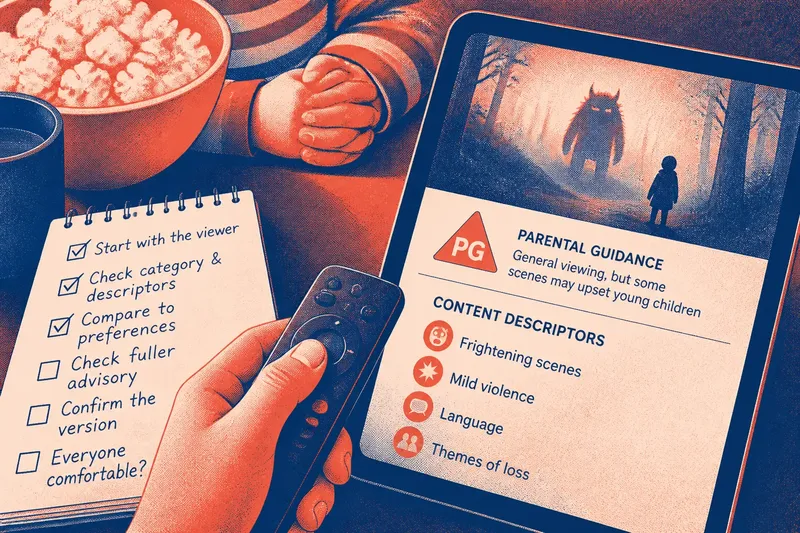
You’re choosing a film for a family evening when an age classification and a short content note appear beneath the title. An age classification can help you decide what to check next, but it cannot decide whether the film suits a particular viewer.
Age classification basics
An age classification is a public-facing signal about a film’s content and its generally intended audience. It gives viewers and caregivers a starting point without requiring them to watch the film first. A classification system applies its own criteria and assigns a label.
Categories and wording vary by country and sometimes by format. A label may describe a film as suitable for a general audience, advise parental guidance, or restrict access under local rules. Check which system issued it and what that label means where the film is offered.
Treat the category like a road sign: it gives you useful direction, but it does not choose the route for every traveler. It cannot predict how a particular person will respond.
What labels reveal
Depending on the system, a classification may alert you to violence, frightening scenes, language, sexual material, drug use, or other themes. Content descriptors can add detail by naming areas that influenced the decision.
Those notes help when you already know what a viewer would rather avoid. Someone comfortable with fantasy danger but not realistic injury can look for descriptors that distinguish those elements, if the listing provides enough detail. A caregiver can use the notes to decide whether to seek a fuller advisory before pressing play.
Some classifications are advisory, while others may restrict access under local rules. Do not assume that a category has the same meaning in every country or on every service.
What labels leave out
A classification cannot predict an individual response. People of the same age may have different experiences, preferences, and sensitivities. A label cannot tell you that one viewer is comfortable with comic peril but unsettled by separation, or that another has a personal reason to avoid a subject.
A broad category also does not explain every scene. Films with the same label may differ in tone and content. A descriptor can name a topic without explaining how often it appears, how intense it feels, or whether it is treated seriously, humorously, or briefly.
Classification is not a rating of quality, truthfulness, artistic merit, or moral message. Nor is it a promise that everyone in the suggested audience will enjoy or feel comfortable with the film.
Reading content descriptors
Descriptors are short notes attached to a classification. They make a broad label more useful by naming kinds of material viewers may encounter, but they are not a complete scene-by-scene account.
Wording matters. “Violence” alone does not say whether the material is stylized, realistic, brief, or sustained. A note about language may not identify exact words or explain the context. Some systems offer more detail than others, and a streaming service may display only part of the available information.
If a descriptor is too general, check a fuller advisory from the classification body or the service carrying the film. Confirm that it describes the same version you plan to watch. If an important concern remains unresolved, choosing another title is a reasonable option.
Choosing for a viewer
Start with the person who will watch, not just the category on the screen. Consider their preferences, prior responses to similar material, and any known sensitivities. Compare those needs with the classification and descriptors, focusing on specific subjects rather than treating the label as a complete answer.
Say you are choosing a suspense film for a young viewer who enjoys imaginary creatures but becomes anxious about realistic emergencies. The listing names frightening scenes but gives little detail. You check the service’s fuller advisory and find that it does not clarify whether realistic emergencies appear. You choose another film, trading the suspense story for a clearer fit with the viewer’s stated concern.
For a group, ask what viewers would rather avoid. Agree that anyone can pause, leave the room, or switch titles without having to defend the choice.
- Check the age category and content descriptors together. If they point to material the viewer wants to avoid, then choose another title or seek fuller detail.
- Check whether the listing names the specific concern. If it does, then compare that note with the viewer’s preferences; if it does not, then consult a fuller advisory.
- Check the viewer’s known responses to similar content. If the material has been difficult before, then choose a different film or agree on a pause plan.
- Check whether a fuller advisory is available. If it answers the concern, then use it to make the decision; if it remains vague, then do not treat the uncertainty as reassurance.
- Check that the advisory matches the version you intend to watch. If it does not, then look for notes on the correct release or choose a title with clearer information.
- Check whether everyone in a group is comfortable with the content. If someone raises a concern, then discuss a change of title or agree that they can leave without explanation.
Why classifications differ
Classification systems use their own categories, wording, and criteria. Local rules and cultural expectations can shape how a system handles particular subjects. The same film may therefore receive different labels in different places; neither label is a universal measure of personal suitability.
A service may show a rating from another market or use its own advisory language. If a label seems surprising, look for the classification body and region it covers before drawing conclusions.
For a particular release, format, or location, check the relevant classification body, service listing, and local rules. This can matter when comparing a theatrical listing with a streaming page or a disc from another region.
Before you press play
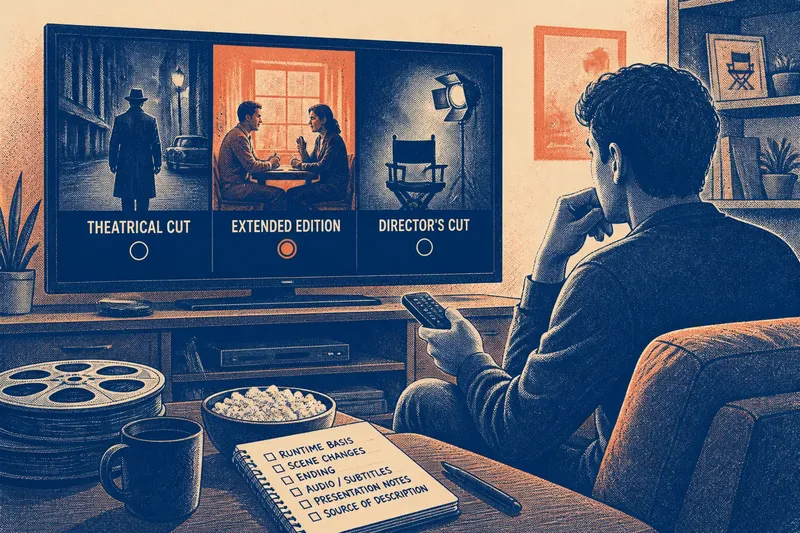
Check these details in order, stopping when you have enough information to make a comfortable choice:
- Identify the system. Find the country or region and the classification body, if listed. If you cannot identify them, treat the category cautiously and seek a clearer listing.
- Check the category’s role. Find out whether it advises or restricts access. If local rules apply, follow the relevant access conditions; if the label is advisory, consider it alongside the viewer’s needs.
- Read the descriptors. Note subjects that matter to the intended viewer. If a listed subject is a concern, look for more detail or choose another film.
- Look for a fuller advisory. Check the official classification page or service details if the short note is vague. If neither resolves the concern, avoid guessing from the category alone.
- Match the version. Confirm that the advisory describes the release you plan to watch. If it does not, find information for that version or select a title with a matching advisory.
- Make a viewer-specific decision. If the information addresses the concern, weigh it against the viewer’s preferences; if it does not, choose another title or agree on a way to stop watching.
Where can I find more detail?
Where should I look for a fuller advisory?
Start with the classification body’s page or the streaming service’s details. Check that the title and version match what you plan to watch.
What if a descriptor is too vague?
Look for a more detailed note from a source that identifies the film and release. If the concern remains unresolved, choose another title rather than treating missing information as reassurance.
Should I ask a child about difficult content?
Ask what kinds of stories feel manageable, and listen without turning the conversation into a test of toughness. Leave room to pause or change the film if the viewer’s response differs from what they expected.
When might professional guidance matter?
For a serious or specific wellbeing concern, a qualified professional can offer advice suited to the person’s circumstances. For an ordinary viewing choice, use the available classification, advisory, and the viewer’s stated preferences.
Using classifications well
An age classification is useful as a general indication of audience suitability under a particular system. It is not a complete account of everything a film contains, and it cannot ensure that every viewer will be comfortable. Pair the category with descriptors and what you know about the person watching.
Read the label, check the notes, and make the final choice for the people who will watch. For age classification, the useful question is not only what the category says, but whether the information answers the concern that matters to this viewer.